
VINCENT CENTER FOR REPRODUCTIVE BIOLOGY
VMHF Endowed Chair in Reproductive Biology

Bo Rueda Named Inaugural Incumbent of VMHF Endowed Chair in Reproductive Biology
Bo Rueda, PhD (center), the director of the Vincent Center for Reproductive Biology (VCRB), is the inaugural incumbent of the Vincent Memorial Hospital Foundation Endowed Chair in Reproductive Biology at Massachusetts General Hospital. “Bo, you are a leading scientist, you are a leading researcher and, importantly for Mass General, you are a leader. And your leadership has been critical to the success of the VCRB,” said David E. Walker (left), chairman of the VMHF Board of Trustees at the reception held in Dr. Rueda’s honor on Nov. 30, 2022. “You have our gratitude for your many contributions to the department, and on behalf of our trustees, congratulations on this very well-earned recognition.” Dr. Rueda and the VMHF were awarded commemorative glass bowls at the event, held in the Paul S, Russell, MD Museum of Medical History and Innovation at Mass General.
The idea of endowing the $2 million chair emerged from a meeting two years ago when a group of VMHF trustees met with Jeffrey Ecker, MD (right), chief of Mass General’s Vincent Department of Obstetrics and Gynecology, to explore how the VMHF might participate in the Campaign for Mass General. “When Jeff suggested the idea of an endowed chair in Reproductive Biology, our trustees were quick to embrace the concept,” Walker said. “We have been watching the progress of the VCRB under Bo’s leadership, and we were thrilled about the opportunity to endow this chair with Bo as the inaugural incumbent.”
The Mass General Development Office, led by Senior Vice President for Development Britain Nicholson, MD, also cited Dr. Rueda’s accomplishments: “As incumbent of the VMHF Endowed Chair, Dr. Rueda will promote and conduct research that can positively influence patient care, advance departmental clinicians’ academic development, and prepare the next generation of clinical and postdoctoral fellows to be leaders in their respective fields. This endowed chair represents an important resource to sustain innovative teaching and groundbreaking research at Mass General and will allow Dr. Rueda and his team of talented physician-scientists to continue to make significant contributions to the fields of reproductive health and gynecologic cancer research for years to come.”
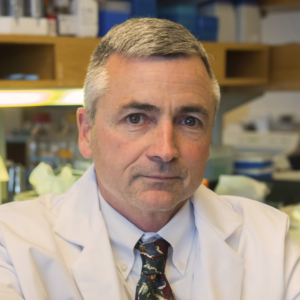
Dr. Rueda's Career Path in Biomedicine
After earning a PhD in reproductive biology from the University of Wyoming in 1992, Dr. Rueda served as a postdoctoral fellow and research scientist at the University of Arizona, followed by a faculty position in the Department of Obstetrics and Gynecology at the University of Kansas Medical Center and an adjunct appointment in the Department of Biological Sciences Department at Wichita State University.
Joining Mass General and Harvard Medical School in 2000, Dr. Rueda served as associate director of the VCRB from 2002 to 2012 and was appointed director in 2013. For six years, he also served as inaugural director of the Deborah Kelly Center for Outcomes Research. In addition to heading the VCRB, today he is director of the Clinical Fellows Research Program in Mass General’s Vincent Department of OB/GYN, and an associate professor in the Department of Obstetrics, Gynecology and Reproductive Biology at Harvard Medical School.
His many Mass General leadership contributions include founding the Gynecologic Tissue Repository. This growing collection of specimens from more than 2,500 patients, both benign and malignant, serves as a precious resource for highly valued pre-clinical studies in which scientists study the cellular and molecular signals that drive gynecologic cancers and other reproductive pathologies.
A prominent basic researcher and scholar, Dr. Rueda has published more than 139 scientific papers. In recent years his research has evolved to focus mainly on benign and malignant diseases of the ovary and uterus, including endometriosis, uterine leiomyomas and gynecologic cancers. His lab has provided evidence to support the functional contribution of ovarian and uterine cancer stem cells to their disease’s pathology, including chemoresistance and recurrence.
Dr. Rueda continues to seek novel drugs to target key cell-signaling pathways identified as potentially clinically relevant and testing these drugs either as a single agent or in combination with standard of care chemotherapy. He also actively collaborates with pharmaceutical companies to develop small molecules or antibody-based strategies to inhibit pathways that drive gynecologic cancers.