
VINCENT DEPARTMENT OF OBSTETRICS AND GYNECOLOGY
Innovations in Patient Care
Vincent clinicians and researchers are spearheading innovative approaches to providing the latest in clinical care. Below are profiles of faculty who have provided leadership in Urogynecology and Reconstructive Pelvic Surgery and in Reproductive Endocrinology and Infertility.
Frontiers of Urogynecology
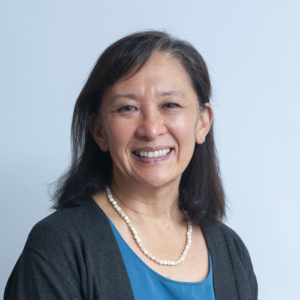
When May Wakamatsu, MD, joined the Vincent Department of OB/GYN at Mass General in 1991, at that time, Urogynecology and Reconstructive Pelvic Surgery (URPS) had not yet been formally recognized as an OB/GYN subspecialty. In 2013 when it was formally established, Dr. Wakamatsu was well prepared to quickly become board-certified, as her clinical and surgical expertise had already focused on pelvic floor disorders, urinary tract infections and other urogynecology conditions. That year, she also was named leader of the Vincent Department’s Division of URPS. “May Wakamatsu has been pivotal in growing the department’s urogynecology division into a robust, well-respected division for clinical care, research and training,” said Jeffrey L. Ecker, MD, MGH Chair Emeritus of OB/GYN, who in 2018 appointed Dr. Wakamatsu the Vice Chair for Gynecology. Among numerous awards honoring her service at Mass General, in 2019 she received the Brian A. McGovern, MD Award for Clinical Excellence and Surgical Services.
Dr. Wakamatsu’s career pathway spans the nation. A California native and 1983 graduate of Case Western Reserve University School of Medicine in Cleveland, she served her OB/GYN residency at the University of California at San Diego, then joined Brigham and Women’s Hospital, followed by Mass General. Now after nearly 34 years of service at Mass General she has stepped down from her clinical and surgical duties, but she will continue administrative and consulting roles. Among her Mass General accomplishments, Dr. Wakamatsu was a leader in establishing two multidisciplinary centers to better serve patients:
- The Center for Pelvic Floor Disorders is designed to help women who develop conditions that involve various regions of the pelvic floor, resulting in urinary incontinence, pelvic organ or rectal prolapse, or other conditions requiring surgical repair. At this center, highly skilled pelvic health specialists work together to devise a treatment plan customized for each patient. This one-stop approach saves patients time and delivers the expert care they need in a timely and coordinated manner.
- The Center for Recurrent Urinary Tract Infections (UTIs) is a newly established center that focuses onUTIs, a condition that affects 20–30 percent of women during their lifetime, often in aging, which can lead to serious and even life-threatening complications. Among strategies focusing on UTI prevention and early intervention, recent research has shown that vaginal estrogen can improve the microbiome of the vaginal tract, and these beneficial bacteria also can help restore the health of the urinary tract. Patients interested in accessing the Center for Recurrent UTIs’ services should ask their referring physician to refer through Mass General’s Urology Department.
An avid teacher and mentor, Dr. Wakamatsu has served on the faculty of Harvard Medical School since 1987, training medical students during their OB/GYN clerkship rotation, for which she received the HMS Outstanding Teacher of Gynecology Award in 2003, 2007 and 2019. In addition, as head of the Division of URPS at Mass General, she has mentored faculty and trained nine URPS fellows, many of whom have joined the full-time faculty, significantly contributing to the growth of the division and services offered to patients. In 2025, she prospectively plans to continue her mentoring activities, including teaching URPS nurse practitioners.

Teaming Up with Apple
Shruthi Mahalingaiah, MD, MS, a physician in the Vincent OB/GYN Division of Reproductive Endocrinology and Infertility and an assistant professor at the Harvard T.H. Chan School of Public Health (HSPH), is an investigator in the Apple Women’s Health Study. The goal of this first-of-its-kind study — in which Apple has teamed up with the National Institute of Environmental Health Sciences (NIEHS) and HSPH — is to gain a deeper understanding of the impact of demographic and lifestyle factors on menstrual cycles and gynecologic conditions including infertility, menopause and polycystic ovary syndrome, in which the ovaries develop numerous small collections of follicles and fail to regularly release eggs, disrupting menstrual cycles. Using an iPhone or Apple Watch, participants input menstrual cycle data and respond to surveys, providing information on lifestyle factors such as stress, sleep and nutrition. This data will be analyzed to understand population-level trends in menstrual and reproductive health outcomes, as well as how lifestyle and other environmental factors impact those outcomes. Launched in 2019, more than 70,000 participants had contributed data by October 2021 to this ongoing study.

Exploring the Environmental Impact
Carmen Messerlian, PhD, MSC, a faculty member in the Vincent’s Division of Reproductive Endocrinology and Infertility and an assistant professor at the Harvard T.H. Chan School of Public Health, is studying how social, built and natural environments impact fertility, pregnancy, child health and development. As director of the Scientific Early Life Environmental Health and Development (SEED) program, she oversees research examining the extent to which environmental exposures affect a couple’s ability to achieve conception, maintain pregnancy and deliver healthy offspring. One NIH-funded study focuses on polyfluoroalkyl substances (PFAS), used in industrial and consumer products such as nonstick cookware, textiles and food packaging. The study aims to determine if concentrations of PFAS in the maternal and paternal serum — before the couple conceives a child — is associated with infertility, pregnancy loss, preterm birth and low birthweight. She also collaborates with lab scientists to find the underlying biological pathways that may lead to infertility and adverse reproductive outcomes. This bench work is conducted in the Vincent Center for Reproductive Biology, a funding priority of the Vincent Memorial Hospital Foundation.